 Staff4dshire Scaffolding
Do I Need Scaffolding for a Roof Repair in Staffordshire?
When does a roof repair need scaffolding, what types of scaffold are used for roofs and chimneys, and how to plan access in Staffordshire.

Most solar PV installations on houses need scaffolding, and for many homeowners it is the most visible part of the whole job. Knowing what to expect makes the process smoother. Here is how scaffolding for solar works, from the survey to the strike.
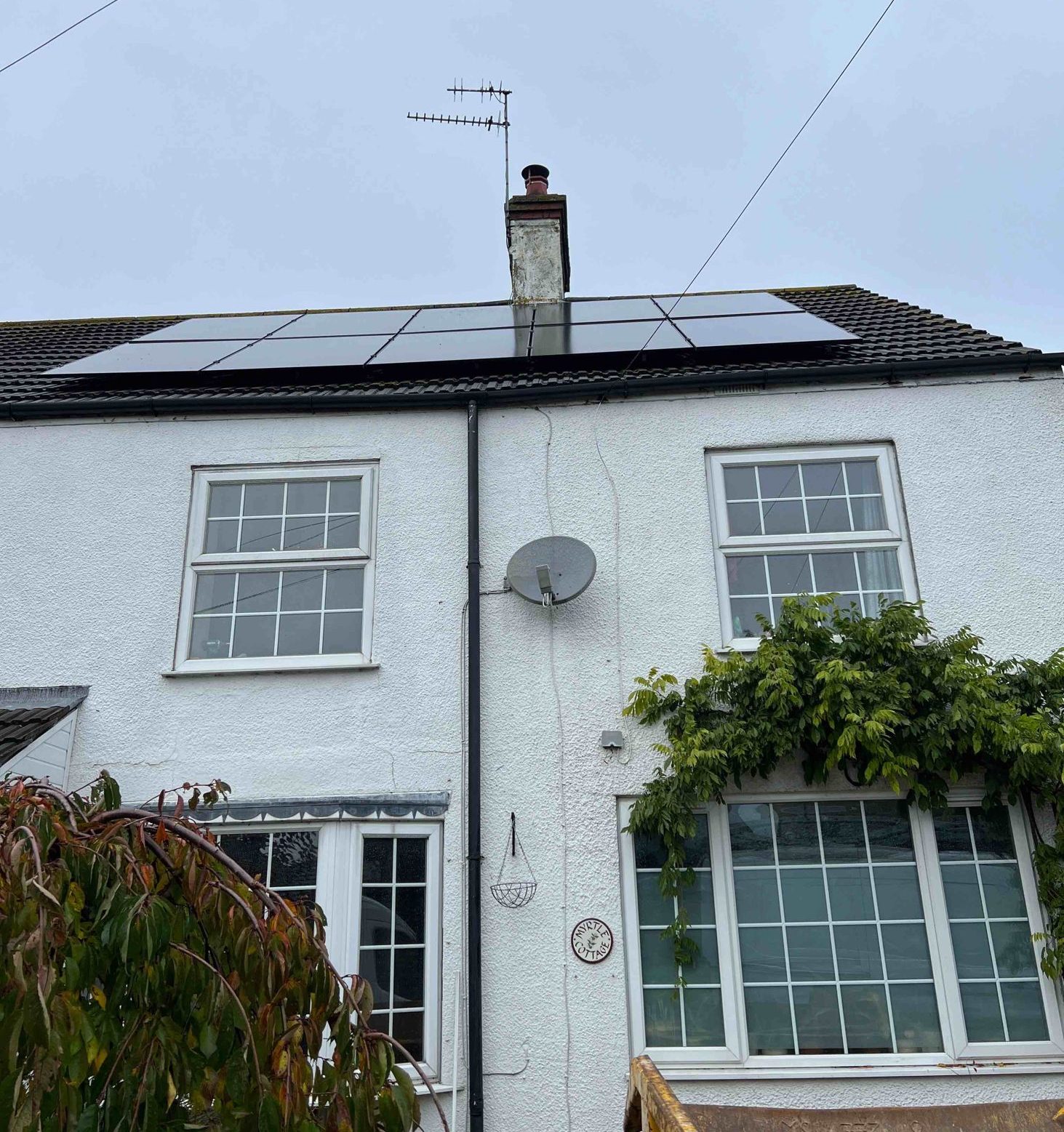
Solar panels are heavy, awkward to carry and fitted close to the roof edge. Installers need a safe platform at eaves level with edge protection, and somewhere to stage panels and rails as they are lifted up. A properly designed scaffold makes the installation safer and quicker, and protects the roof and gutters while the work is carried out.
Before the install, we look at the elevations where panels will go, the ground conditions, access for our vehicles, and anything that might get in the way, such as conservatories, extensions, porches or overhead cables. If the scaffold needs to go on a neighbour's land or the pavement, we will tell you what permission or licence is needed.
For a simple install on one roof slope, an eaves-level scaffold along that elevation is common, often with a loading bay for panels. For installations across more than one slope, or on hipped roofs, the scaffold may wrap around a corner. Where there are conservatories or flat roofs below, the design will bridge or protect them.
The scaffold usually goes up shortly before the installation and comes down soon after it is signed off. The exact time depends on the size of the system, any roof repairs needed first and the weather. Because we run our own fleet of flatbeds and lorries, we control our own delivery and collection dates.
If the roof needs work, such as slipped tiles, worn ridges or tired roofline, the best time to do it is while the scaffold is up and before the panels go on. Within Staff4dshire Group, roofing comes from Staff4dshire Roofing Specialists and solar from Margav Energy, so one scaffold can serve both.
Clear the area around the house where the scaffold will stand, move cars off the drive on the day, and let neighbours know what is happening. Keep children and pets away from the scaffold and never let anyone alter it.
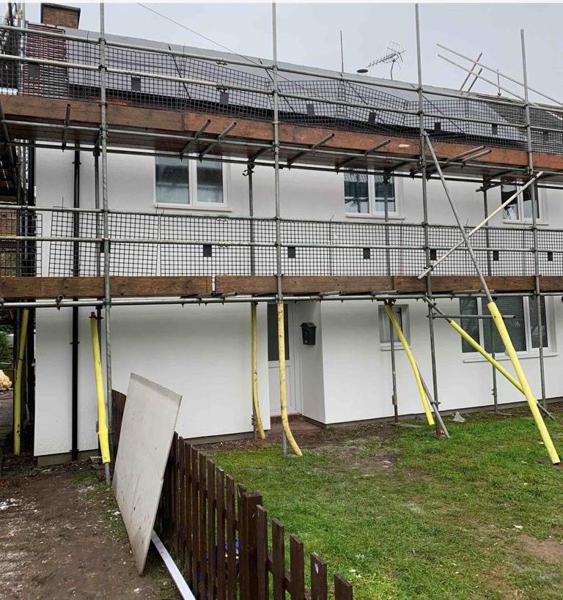
For most domestic installs the scaffold runs along the eaves of the roof slope that will carry the panels, with a working platform just below the gutter line. Guard rails and toe boards stop people and materials falling, and brick guards or netting may be added where panels and rails are being lifted. On some roofs a loading bay or a hoist position makes it easier to get panels up safely.
Where the array is large, or the roof is steep or high, the scaffold may need to return around a gable or rise higher so installers can reach the top courses. That is a decision for the scaffold designer and installer together, based on the roof and the layout of the panels.
Scaffold and installation dates need to line up. Ideally the scaffold goes up shortly before the installation team arrives and comes down soon after the system has been commissioned, so you are not paying for days when nothing is happening. Weather can move installation days, so ask how any delay affects the hire period.
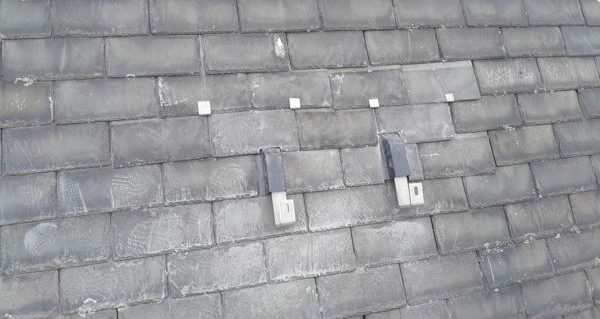
Before the scaffold is struck, it is a good moment to have a final look at the roof: check that cables are neatly run, tiles around the mounting brackets are seated properly and gutters are clear of offcuts and debris.
Think about where the scaffold will stand. Terraced and semi-detached homes may need the scaffold to cross a shared path or a neighbour's frontage, so talk to them early. Keep the area under the scaffold clear while work is going on, and remember that the scaffold is a workplace: it should only be used by the people installing it and the trades working from it.
We provide scaffolding for solar installations on homes and commercial buildings across Rugeley, Stafford, Lichfield, Cannock and the West Midlands, for our own group and for other installers.
Some installers use other access systems, but a scaffold with edge protection is the most common safe method for domestic roofs.
We protect surfaces with base plates and boards. Tell us about anything delicate at the survey.
No, we provide scaffolding for other solar installers too.
Staff4dshire ScaffoldingWhen does a roof repair need scaffolding, what types of scaffold are used for roofs and chimneys, and how to plan access in Staffordshire.
 Staff4dshire Roofing Specialists
EPDM rubber, GRP fibreglass or torch-on felt? A practical guide to choosing a flat roof for garages, extensions and dormers in Staffordshire.
Staff4dshire Roofing SpecialistsDamp around a chimney breast? How lead flashings, back gutters, pointing and valleys cause most roof leaks, and how roofers in Staffordshire fix them.