 Staff4dshire Properties
Planning a Garden Transformation: Lessons from Lichfield
How to plan a full garden transformation, from sandstone paving and sleeper beds to pergolas and firepits, based on a real Staff4dshire project in Lichfield.

A patio that looks tired is not always a patio that needs replacing. Sometimes cleaning, re-grouting and a few repairs bring it back to life; sometimes the problems run deeper. Here is how to tell the difference.
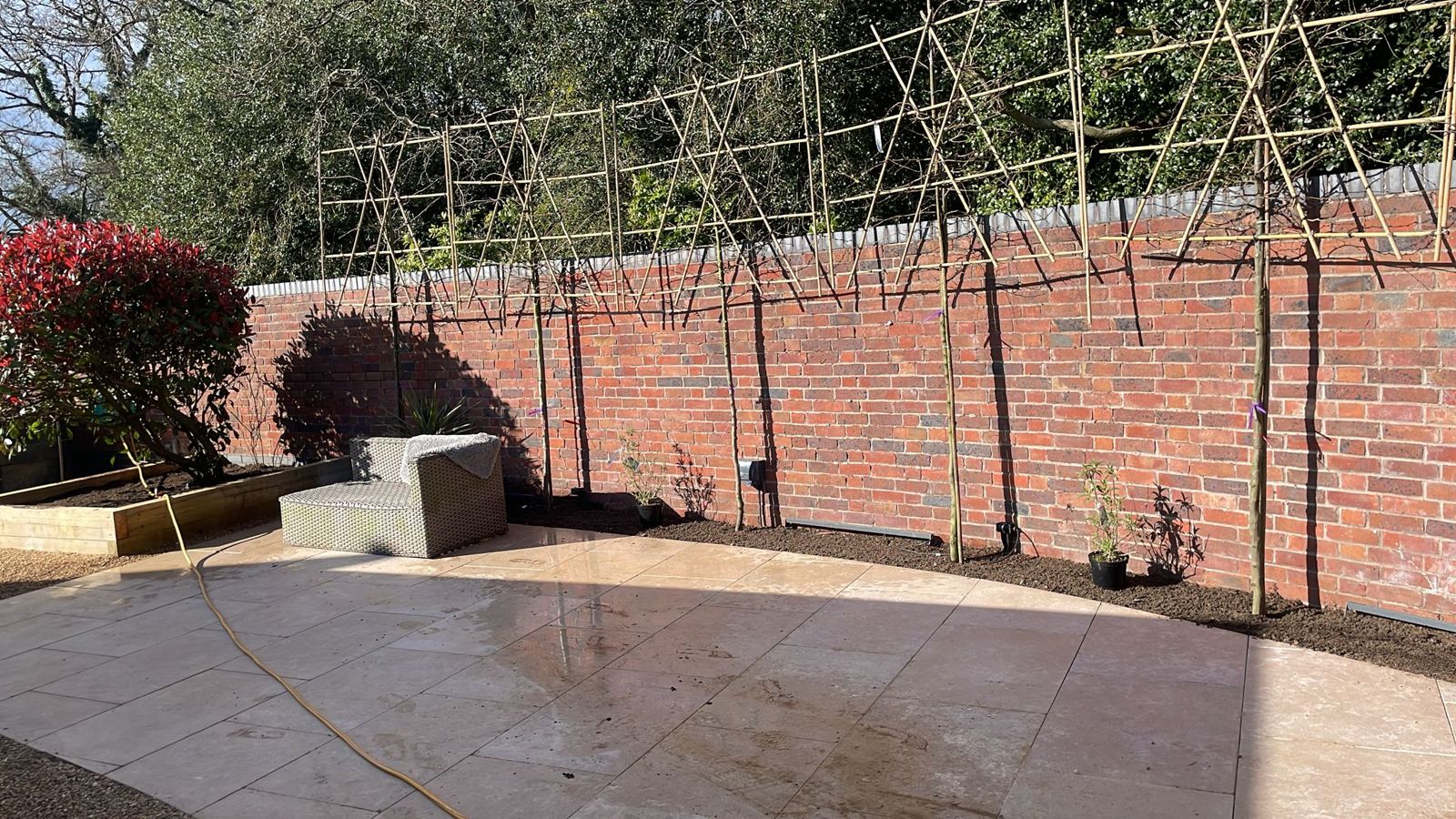
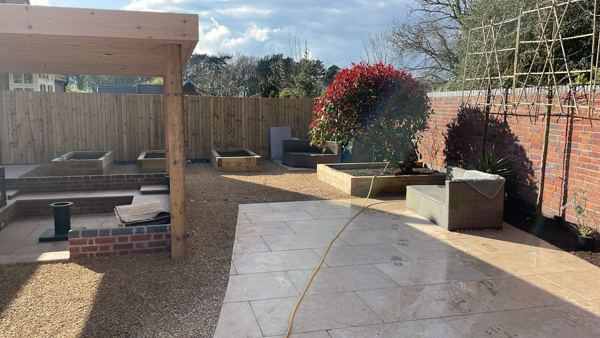
If the slabs are sound and level and the patio drains, but it looks dirty, the joints have eroded or weeds are coming through, restoration is often the answer. For Becky in Lichfield, we cleaned and re-grouted around 60m² of patio, plus the pathway, steps and coping tiles, so the whole garden looked fresh again without the cost and disruption of starting over.
Rocking or sunken slabs, widespread cracking, standing water, slabs sloping towards the house or a patio that has heaved are signs that the base has failed. Re-grouting will not fix these; the patio needs lifting and relaying on a new or repaired sub-base, or replacing entirely.
A new patio starts with digging out to the right depth, a compacted sub-base and laying the paving on a full mortar bed, to falls so water runs away from the house. For Ron in Newcastle-under-Lyme, we laid an 18m² Indian sandstone patio fully bedded on mortar over a compacted sub-base, laid to falls, with a step from the house and a gravel margin with a block border.
Indian sandstone, porcelain and concrete slabs all have their place. Porcelain is very dense and easy to clean; sandstone has natural character; grey slabs are a practical, cost-effective choice. Whatever you choose, the base and the laying matter more than the slab.
Steps, paths and copings often take the most wear and can be restored or rebuilt alongside the patio. Getting rise and going consistent makes steps safer and more comfortable.
Restoration cannot fix a failing base. If slabs rock underfoot, have sunk or lifted, or water pools in the same places after rain, the problem is usually below the surface. Cracked slabs across a large area, or a patio that falls towards the house rather than away from it, also point to taking it up and starting again with a properly compacted sub-base and correct falls.
A typical restoration starts with a thorough clean to remove dirt, algae and staining. Old, eroded or weedy joints are then raked out and the patio is re-grouted, using a jointing compound or mortar suited to the stone and the joint width. Individual cracked or loose slabs can be lifted and relaid at the same time. On many patios, a sealer can be applied afterwards to help with future cleaning; whether that is suitable depends on the stone.
It is worth including the surrounding features. Steps, coping, paths and edging often look tired at the same time as the patio, and cleaning them together gives a consistent finish.
Replacement means lifting the existing slabs, digging out to the right depth, laying and compacting a sub-base, and relaying new slabs on a full mortar bed with the right falls for drainage. It costs more and takes longer, but it is the chance to change the size or shape of the patio, change the material, improve drainage or add steps and walls.
Sweep regularly, deal with weeds before they take hold in the joints and clean off algae before it builds up. Avoid harsh chemicals that can mark some stones, and check that downpipes and gutters are not discharging water across the paving. A little regular care keeps a restored or new patio looking good for much longer.
Staff4dshire Properties restores and builds patios, paths and steps across Lichfield, Rugeley, Cannock, Stafford, Birmingham and the West Midlands.
Yes, if the slabs and base are sound. We have restored around 60m² of patio, plus paths, steps and copings, in Lichfield.
Both work well when laid properly. Porcelain is dense and easy to clean; sandstone has natural character.
We work across Staffordshire, Birmingham and the West Midlands.
Staff4dshire PropertiesHow to plan a full garden transformation, from sandstone paving and sleeper beds to pergolas and firepits, based on a real Staff4dshire project in Lichfield.
 Staff4dshire Roofing Specialists
EPDM rubber, GRP fibreglass or torch-on felt? A practical guide to choosing a flat roof for garages, extensions and dormers in Staffordshire.
Staff4dshire Roofing SpecialistsDamp around a chimney breast? How lead flashings, back gutters, pointing and valleys cause most roof leaks, and how roofers in Staffordshire fix them.